Match rock class before options
Start with UCS and abrasivity, then lock hole diameter and rod system before debating cabin options or paint.
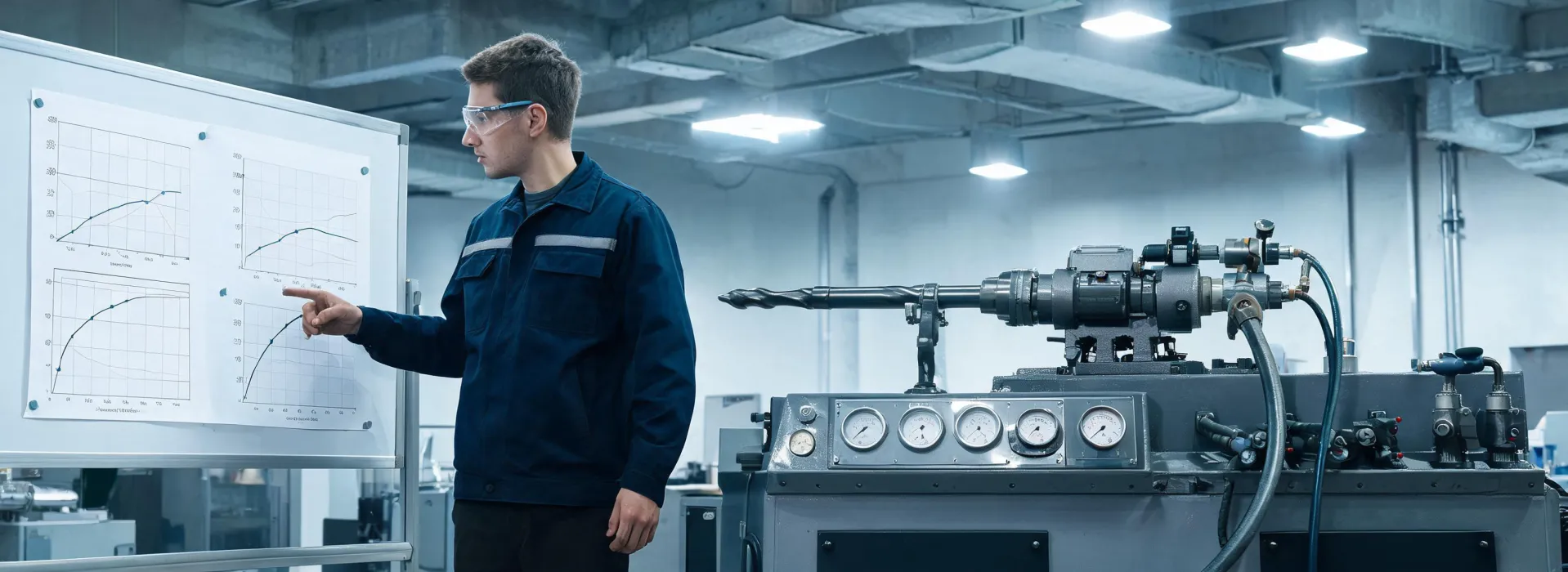
Authoritative specification pages for procurement and chief engineers — hole diameter, feed force, rock UCS and shift duty in one place.
We publish the rock-drilling torque, feed force and air envelopes our test benches can reproduce — so tender packages stop arguing about brochure fiction.
Start with UCS and abrasivity, then lock hole diameter and rod system before debating cabin options or paint.
Compressor and rock-drill packages are co-sized so penetration does not collapse when regeneration or altitude changes arrive.
CE, EPA Tier 4 Final, EU Stage V and ATEX evidence ships with serial-specific dossiers ready for HSE and customs files.
Values below are factory-test envelopes used in 2024–2026 tender worksheets. Site UCS, altitude and flush quality shift realized penetration; request the serial-specific sheet before freezing a BOM.
| Parameter | Surface bench package | Underground jumbo package | Unit / note |
|---|---|---|---|
| Operating weight | 18,500–32,000 kg | 14,000–28,000 kg (carrier + boom) | kg — excludes optional rod carousel |
| Engine power | 129–210 kW (Tier 4 Final / Stage V) | 90–160 kW diesel or electric trolley | kW / hp equivalent on data plate |
| Hydraulic system pressure | 280–350 bar (28–35 MPa) | 250–320 bar (25–32 MPa) | bar / MPa at rock-drill inlet |
| Rotary drilling torque | 850–2,400 Nm | 700–1,900 Nm | Nm — rock-drill package |
| Feed force | 12–35 kN | 10–28 kN | kN programmable |
| Ground pressure | 48–72 kPa (standard shoes) | N/A (rail / rubber tire carriers vary) | kPa — soft-bench option available |
| Pile / hole penetration depth | Up to 36 m benches | Face rounds to 5.2 m | m — rod string limited |
Two industry selection debates show up on almost every Epiroc RFQ. We present both sides so procurement can record the decision path — not a brochure winner.
When UCS exceeds ~180 MPa or hole depth stretches past ~24 m, buyers argue whether top-hammer percussion or down-the-hole / rotary packages deliver lower cost per meter.
Higher net penetration in medium-hard granite (typically 0.8–2.4 m/min on verified benches), simpler compressor sizing, and faster pad moves. Preferred when blast patterns change often and rod handling labor is available.
Straighter holes and more stable energy at depth in abrasive or fractured rock; air/hydraulic packages cost more up front but cut deviation rework on long production holes and some civil anchors.
Adapted from the broader excavator carrier debate: soft quarry floors and steep benches favor tracks; frequent highway transfers favor wheels.
Lower ground pressure (often 48–72 kPa) and better stability for feed towers on uneven benches. Mainstream choice for fixed quarry and mine pads where a lowboy already moves the fleet.
Road transfers without a dedicated trailer cut mobilization cost on multi-site civil campaigns. Trade-off: higher ground pressure and more careful leveling before collaring on soft spoil.
Witness tests log rotary drilling torque and feed force against the serial curve; data files ship with the Declaration of Conformity (CE 2006/42/EC).
On request we run a supervised 1–2 shift trial recording drilled meters, bit wear and hydraulic cleanliness samples for your UCS class.
Compare hole diameter, feed force, compressor air (m³/min @ bar), operating weight and MTTR rider — dimensions that matter without branding competitor SKUs.
Send rock class, hole diameter and annual drilled meters — engineering returns a selection worksheet and torque-chart pack.
Request a Capability Audit